In this thoughtful and deeply engaging reflection, Lauren offers an inside look at her internship experience and the many layers of work involved in stewarding one of the world’s most significant desert plant collections.
Lauren’s article reveals how her role extended far beyond routine horticulture to include scientific research, archival documentation, GIS mapping, propagation, pollination, and preservation of living collections. Working alongside horticulturists, botanists, curators, and GIS specialists, she gained firsthand experience in how botanical institutions safeguard plant history while advancing knowledge for future generations.
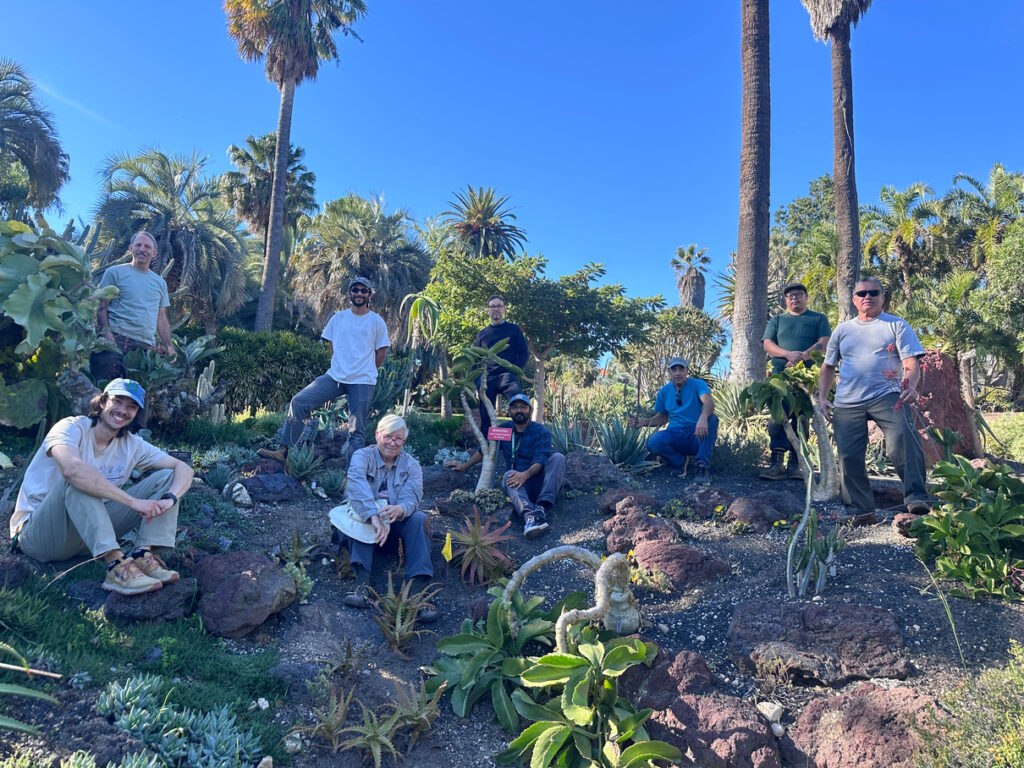
at The Huntington
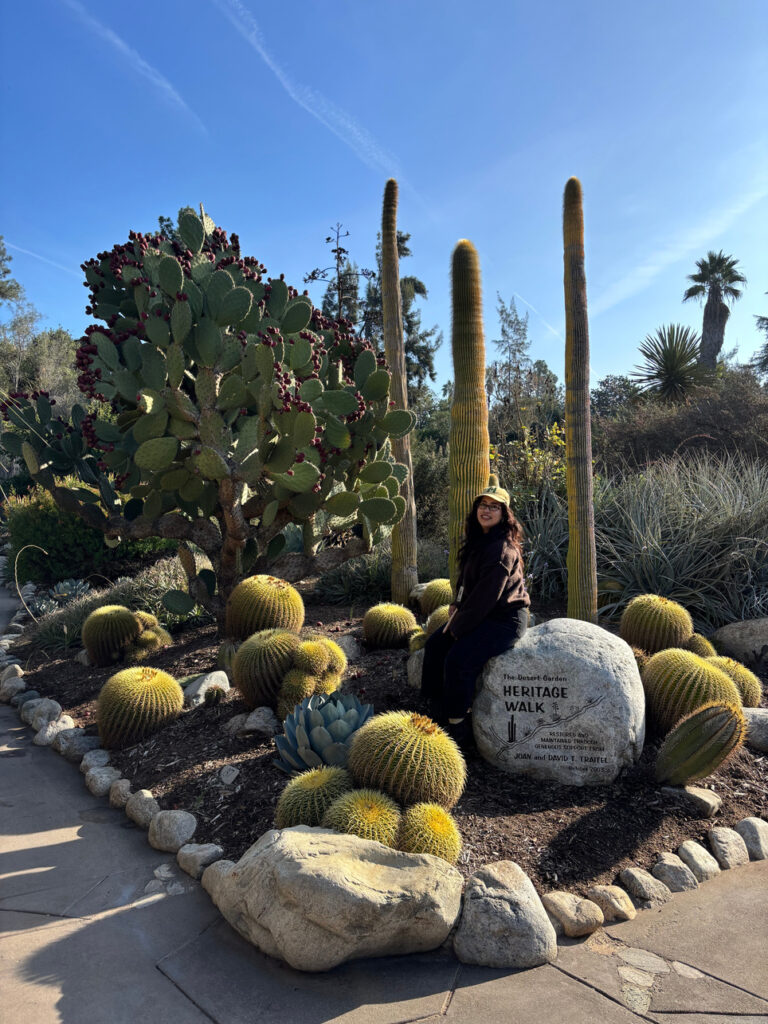
Desert Garden at The Huntington
Reflections on my Internship by Lauren Lozano
This grand opportunity has come to an end and what a privilege it was to be this year’s Cactus and Succulent Society of America intern at The Huntington in San Marino, California. This experience enriched my connection to cacti and succulents far beyond what initially drew me to them. I often say that I did not choose these plants; instead, I fell into them, drawn towards something I only knew was bigger than myself and something that I realized would require years of study to understand. Going into the Desert Garden every sunrise, among massive, century-old specimens, I felt that reminder daily but only deeper. Nothing compares to those quiet mornings among the Desert Garden’s history, age, diversity, and endless possibilities of new discoveries and knowledge.
As the CSSA intern, I quickly realized that my role was not only horticultural but also preservational, archival, and scientific. The plants in the Desert Garden are not simply maintained; they are documented, studied, and stewarded with a level of continuity that allows future generations to understand where they came from and how they’ve grown. Working alongside horticulturists and botanists who have devoted their lives to these taxa gave me a new understanding of what it means to be part of a scientific community.
My responsibilities were wonderfully diverse and developmental. Each responsibility offered a different perspective into how a world-renowned botanical institution cares for, preserves, and advances knowledge of desert species. On my first day, I toured the extensive and publicly inaccessible acres of the Desert Garden, gaining an early appreciation for the scale and complexity of the collection. I propagated several dozen Aeonium specimens and explored the Desert Conservatory, which I found thoughtfully arranged by country, each section highlighting rare and region-specific taxa in pristine condition. I also had the opportunity to relocate significant specimens such as Fouquieria ‘Pink Instead’ from the Desert Nursery to the Desert Garden, an experience that underscored both the horticultural and logistical considerations of managing mature desert plants.
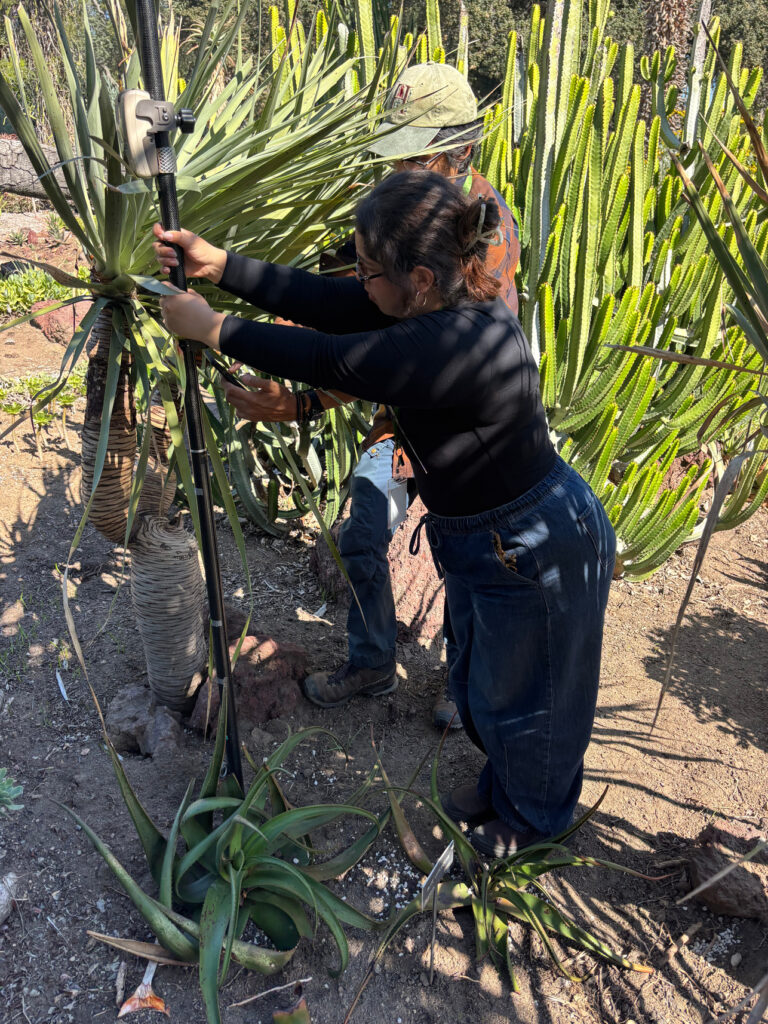
Throughout my internship, I attended a variety of seminars offered through The Huntington, covering subjects such as avocados, oaks, notable seasonal blooms, orchids, and corpse flowers. These seminars broadened my botanical foundation and contextualized the living collections within current research and horticultural best practices. I collaborated closely with GIS specialists in the Desert Garden to map specimens and record data used to monitor structural changes over time. This included marking newly accessioned specimens to continue accurate recordkeeping, as well as documenting those that had completed their life cycle. To preserve the integrity of each plant’s history, I installed physical PVC labels and metal tags, ensuring that every specimen maintained a clear link between its living identity and its digital records. All plants were logged within a geographic database and associated with accession numbers stored in online records, complemented by at least two physical tags for redundancy. My work required proficiency with a wide range of tools, including the EOS Arrow Gold GNSS receiver mounted on a 2-meter pole, used in conjunction with Field Maps for high-accuracy geolocation. I also regularly used telescopic pruners, pruning saws, and a jeweler’s loupe for inspecting morphological details of plants and flowers. Propagation was a core part of my responsibilities across numerous genera, including seed sowing, cuttings, offsets, and soil preparation. Each method strengthened my understanding of plant development, physiology, and long-term horticultural care. I participated in hand pollination of select taxa, and I developed an immeasurable appreciation for The Huntington’s commitment to clear, accurate, and historically consistent plant labeling, a practice whose scientific significance I hadn’t fully understood before. I engaged in controlled pollination on various specimens to assess seed viability and determine which flowers successfully set fruit.
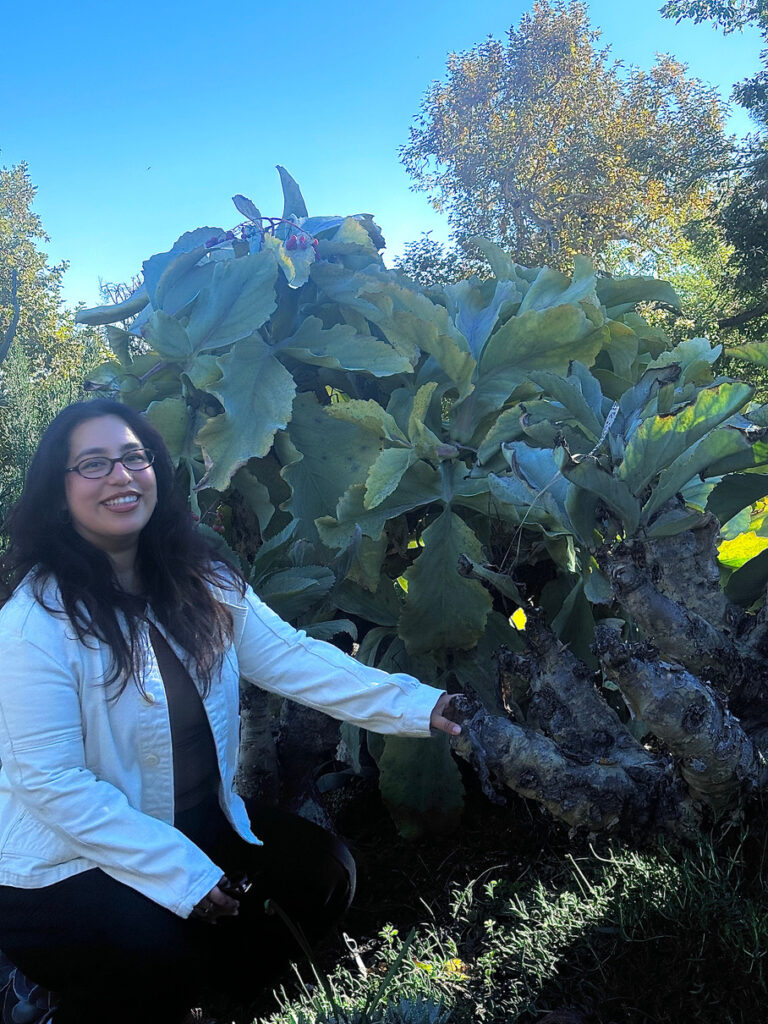
One of my ongoing research interests involves Cyphostemma species. I have intentionally collected fruit across multiple species and seeds at different developmental stages to analyze their traits and investigate their chemical composition. While the presence of oxalic acid and oxalate crystals in Cyphostemma stems and leaves is well documented, the presence of oxalic acid is not noted in the fruit despite the experiential evidence of those who have tasted them. I am expanding this research to better understand its biochemical profile and potential toxicological implications. My work extended into The Huntington’s extensive botanical library, where I focused on literature related to South African bulbs, caudiciforms, Cyphostemma, Oxalis, and other groups central to my academic and horticultural interests. Additionally, I facilitated an educational visit for students from my college. Together, we toured multiple conservation and research areas with curators and staff, providing students with firsthand exposure to the daily work of botanists, horticulturists, and researchers. This experience emphasized the importance of mentorship, accessibility, and cultivating the next generation of plant scientists. The range of plants in the Desert Garden gave me a level of exposure almost impossible to find anywhere else. Having access to such mature, genetically diverse specimens only strengthened my understanding of plant morphology and growth habits. One of the most transformative aspects of the internship was being surrounded by people who think and care deeply about these plants. Conversations with curators, botanists, GIS specialists, and researchers opened my mind to unexpected possibilities. This community supports curiosity and it is not only encouraged but shared, multiplied, and passed along.
I leave The Huntington with greater knowledge, renewed curiosity, and a sense of belonging within a community of people who care deeply about desert plants. I am especially grateful to the entire Desert Garden team for their support, guidance, patience, and generosity. Their willingness to share their expertise shaped my experience in ways I will carry throughout my career. I also extend my heartfelt thanks to the CSSA for making this internship possible, and to The Huntington for welcoming me into a place where learning and discovery feel endless.
Most importantly, I leave with the understanding that this work is part of something larger than any one person’s contributions and it is precisely why I want to continue being a part of this process and carry it forward.
The CSSA is proud to support dedicated students like Lauren, who are making a difference in the world of botany. Her work at the Huntington is a testament to the importance of fostering the next generation of plant enthusiasts and conservationists. We look forward to seeing all that Lauren will achieve in her bright future.
Help us conserve xerophytic plants and desert ecosystems through your membership or an earmarked donation.