
2027 Biennial Convention Speakers


International Presenters
Dr. Alberto Burquez – Mexico

Dr. Alberto Burquez is a researcher in the Department of Ecology of Biodiversity at the Instituto de Ecología, National Autonomous University of Mexico (UNAM). He earned his M.Sc. from UNAM and his Ph.D. from the University of Cambridge. An internationally recognized ecologist and evolutionary biologist, his research focuses on the ecology, evolution, genetics, and biogeography of desert plants, with particular emphasis on columnar cacti of the Sonoran Desert. His work also examines the effects of extreme climatic events, drought and freezing tolerance, invasive plant species, and the ecological services provided by desert ecosystems.
In his presentation, Dr. Burquez will share insights from decades of research on the remarkable columnar cacti of the Sonoran Desert, exploring their ecology, evolution, and adaptation to one of the world’s most challenging environments. His work provides a deeper understanding of the ecological importance of these iconic plants and the conservation challenges they face in a changing climate.
Stefan Campbell – Chile

Stefan Campbell is an Australian naturalist, environmental consultant, and owner of Cactus Explorer Tours and Consulting. Based in northern Chile, he has spent years exploring the deserts of South America, conducting field research on cacti, desert ecology, and plant conservation. His work combines scientific research with extensive habitat experience, and he is widely recognized for his expertise on the Chilean genus Copiapoa. Stefan is the author of Copiapoa – A Comprehensive Review of the Genus and Habitat Guide. Published by the CSSA, Copiapoa is an in-depth treatment of one of the world’s most fascinating cactus genera.
In his presentation, Stefan will draw on his years of fieldwork to explore the ecology, taxonomy, and conservation of Copiapoa in the coastal Atacama Desert. Through stunning habitat photography and firsthand observations, he will examine the remarkable adaptations that allow these endemic cacti to thrive in one of the driest environments on Earth, while discussing the challenges they face from climate change, habitat disturbance, and illegal collection.
Graham Charles – United Kingdom – Keynote Speaker

Graham Charles is current President of the British Cactus and Succulent Society and one of the world’s most respected cactus authorities, with more than six decades of experience growing, studying, and documenting cacti and succulents. A Fellow of the Cactus and Succulent Society of America, he has made more than 20 expeditions to South America to study plants in their native habitats and has presented over 1,000 lectures throughout Europe, Australia, New Zealand, and the United States.
He is an advocate for conservation through cultivation, and has long promoted the propagation of documented, seed-grown plants to reduce pressure on wild populations.
Dr. Roy Earle – United Kingdom

Dr. Roy Earle is a professional ornithologist, retired veterinary surgeon, and founding member of the Lithops Research & Conservation Foundation. Born in Namibia, he has devoted more than two decades to studying the ecology, genetics, and conservation of Lithops in their native habitats across South Africa and Namibia. His extensive collection of genetically pure Lithops, all grown from seed, now supports ongoing genetic research at Trent University in Ontario.
In his presentation, “Lithops? But They Don’t Do Nothing”, Dr. Earle shares how long-term field monitoring and modern molecular research are transforming our understanding of these remarkable “living stones.” His talk highlights how studies of wild populations are revealing their ecology, diversity, and evolutionary relationships, while providing valuable insights that are helping guide the conservation of Lithops in their natural habitats.
Ricardo Ramírez Chaparro – Mexico

Ricardo Ramírez Chaparro is a Mexican naturalist, field explorer, and wildlife photographer based in the northern state of Chihuahua. With a particular interest in the flora and fauna of northern Mexico, he regularly travels throughout the region documenting its diverse and often remote ecosystems.
Ricardo has developed a deep passion for cacti, succulents, reptiles, and nature in general. His field expeditions take him into remote canyons, mountains, and other habitats where he photographs plants and animals in their natural environments. As an amateur naturalist and photographer, he contributes his observations and documentation to ongoing research, particularly in the study of reptiles and cacti.
Through his fieldwork and photography, Ricardo seeks to increase appreciation for Mexico’s remarkable biodiversity and contribute to its understanding and conservation.
Dr. Ernst van Jaarsveld – South Africa

Dr. Ernst van Jaarsveld is one of the world’s foremost authorities on succulent plants and a renowned South African botanist, horticulturist, and author. During his distinguished career, he served as curator and horticulturist at the Kirstenbosch National Botanical Garden, where he specialized in the cultivation, conservation, and study of southern African succulents. An internationally recognized expert, he has described more than 80 new plant species and authored numerous books on succulents, including Succulents of South Africa, Gasterias of South Africa, Cotyledon and Tylecodon, and Tree Aloes of Africa.
Dr. van Jaarsveld has spent decades exploring the diverse succulent flora of southern Africa, combining extensive fieldwork with horticultural expertise to advance the understanding and conservation of these remarkable plants. His presentation draws on a lifetime of botanical exploration, sharing insights into the diversity, ecology, cultivation, and conservation of southern Africa’s extraordinary succulent flora, illustrated with the exceptional photography and firsthand observations for which he is widely known.
Pijaya Vachajitpan – Thailand
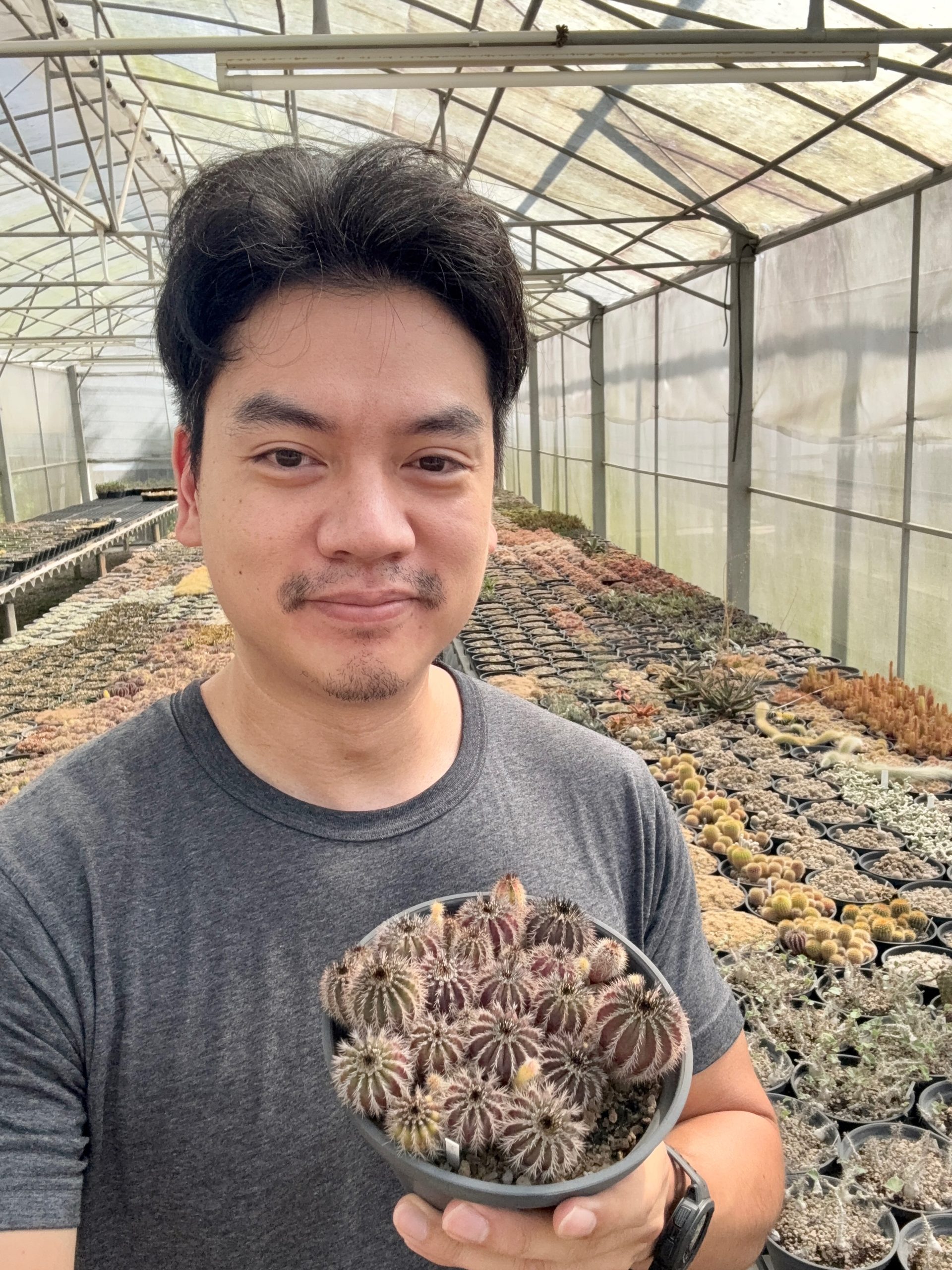
Pijaya Vachajitpan is a well-known horticulturist and owner of 2Bees’ Garden nursery in Chiang Mai, Thailand. He completed his undergraduate studies at the University of California, Santa Cruz, before earning an advanced degree in plant genetics and plant breeding from the University of East Anglia in the United Kingdom. After returning to Thailand, he served as a lecturer at Assumption University in Bangkok before leaving academia to pursue his passion for horticulture as a full-time nurseryman.
With more than 30 years of experience growing a wide variety of plants, including cacti and succulents, Pijaya is a frequent judge at plant shows and serves as a scientific editor for a Thai cactus and succulent journal.
Pijaya has contributed articles to the Cactus and Succulent Journal, including works on Aloe hybridization and Euphorbia cultivars in Thailand. His expertise in cultivation and plant breeding, combined with his extensive experience growing cacti and succulents in Thailand, has established him as a respected member of the international cactus and succulent community.
US Presenters
Dr. Peter Breslin
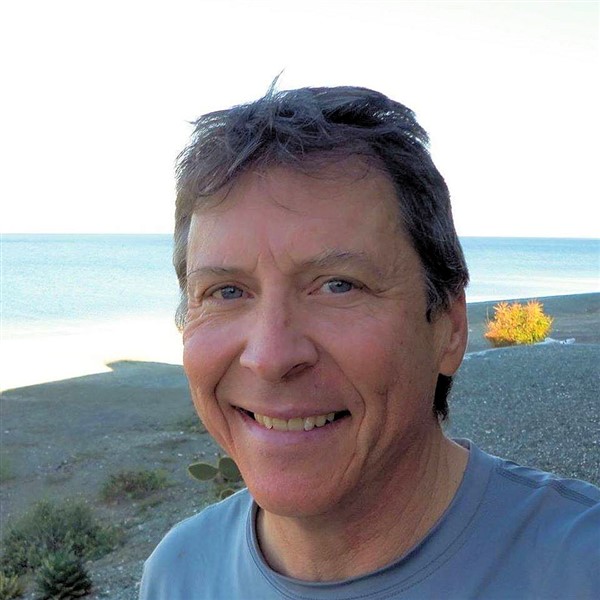
Dr. Peter Breslin has spent more than 30 years studying cacti in their native habitats, with a particular passion for the flora of Baja California and the Sonoran Desert. He earned his Ph.D. at Arizona State University, where his research focused on the conservation, evolution, and biogeography of Mammillaria and Cochemiea in Baja California. His work has been supported by multiple research grants from the Cactus and Succulent Society of America, and he has published extensively on cactus evolution, ecology, and conservation. Peter is the Editor of the Cactus and Succulent Journal and Haseltonia. He is also a co-author of The Field Guide to Cacti and Succulents of Arizona, published by the Tucson Cactus and Succulent Society.
Currently a research scientist at The Desert Laboratory at the University of Arizona, Dr. Breslin is leading research on the long-term monitoring of saguaros in the Sonoran Desert. His recent work analyzes data from the sixth comprehensive survey of more than 4,000 saguaros on Tumamoc Hill since 1964, providing critical insights into the ecology, conservation, and management of Arizona’s iconic giant cactus. Currently, he is leading a research project in partnership with the USGS and Saguaro National Park on possible impacts of future climate scenarios on the national treasure of the park’s sahuaros. He is also conducting a phylogenomic study of the genus Pediocactus which has been funded by both the CSSA Research Committee and the CSSA Conservation Committee. His presentations at the convention will cover all of his current research.
Mark Dimmitt, Ph.D.

Dr. Mark Dimmit is a Tucson-based botanist, naturalist, plant breeder, and longtime member of the cactus and succulent community. He earned a B.S. from Pomona College, an M.S. from UCLA, and a Ph.D. in biology from the University of California, Riverside, specializing in herpetology.
Mark spent more than 30 years at the Arizona-Sonora Desert Museum, where he served as Curator of Botany and later as Director of Natural History. His research and writing have focused on ecology, horticulture, and the natural history of the Sonoran Desert. He has authored more than 50 scientific and popular publications and was a major contributor to A Natural History of the Sonoran Desert, serving as senior editor of its revised 2015 edition. He is also coauthor of Adenium: Sculptural Elegance, Floral Extravagance.
Mark is particularly well known for his work as a plant breeder. He has spent decades hybridizing Adenium, Trichocereus (now generally included in Echinopsis), and Tillandsia, introducing numerous cultivars. His Adenium breeding produced several notable cultivars, including ‘Crimson Star,’ ‘Evelyn Marie,’ and ‘Bouquet.’ He continues to grow and collect unusual succulents and epiphytes at his home and greenhouses in Tucson.
A Fellow of the Cactus & Succulent Society of America, Mark has made lasting contributions to both the scientific understanding and cultivation of desert plants. His work reflects a lifelong passion for the remarkable diversity of plants and animals of the Sonoran Desert.
Jane Evans

Jane Evans was born and raised in Tucson, Arizona, and has spent a lifetime surrounded by and inspired by the plants of the Sonoran Desert. After earning a Bachelor of Science degree in Plant Sciences from the University of Arizona, Jane began a lifelong journey of growing, studying, and sharing her passion for desert plants.
For decades, Jane has specialized in cultivating Boojums (Fouquieria columnaris) and Ocotillos (Fouquieria splendens), two of the most iconic and fascinating plants of the Sonoran Desert and surrounding regions. Her interest in these remarkable species led her to develop a deep appreciation for growing them from seed—a practice that has become an annual tradition of propagation, observation, and discovery.
Together with her husband, Gene Joseph, Jane has owned and operated Plants for the Southwest for 41 years, a Tucson-based desert plant nursery specializing in plants from arid regions around the world. Over the years, she has grown thousands of desert plants from seed, including extensive collections of Lithops and many other unique species.
Jane’s enthusiasm for propagation and conservation is rooted in her desire to share the beauty and diversity of desert plants with others. Through her experience as a grower, nurseryman, and educator, she inspires fellow enthusiasts to explore the rewards of cultivating these extraordinary plants.
Dr. Tania Hernández Sanders

Dr. Tania Hernández Sanders is a Research Scientist at the Desert Botanical Garden in Phoenix, Arizona, and an Adjunct Faculty member at Arizona State University. An internationally recognized expert in cactus evolution and conservation genomics, her research uses innovative genomic technologies to investigate the origin, diversification, adaptation, and conservation of cacti and agaves. Her work has contributed significantly to our understanding of the evolutionary history of the cactus family and the processes that have generated its extraordinary diversity.
Born, raised, and educated in Mexico City, Dr. Hernández grew up in Iztapalapa and developed an appreciation for the remarkable plant diversity of semiarid central Mexico. She completed her undergraduate and graduate studies at the National Autonomous University of Mexico (UNAM), earning her PhD before beginning a career that has taken her across diverse ecosystems and research institutions.
As a postdoctoral researcher in the prestigious Victoria Sosa Lab, she spent several years studying the biodiversity of the highland cloud forests of Veracruz. In 2014, she moved to Tucson, Arizona, where she continued her research as a postdoctoral researcher in the Wiens Lab at the University of Arizona and later joined the Arizona Genomics Institute under Rod Wing, expanding her expertise in genomics. She subsequently returned to Mexico as a junior scientist at LANGEBIO (National Laboratory of Genomics for Biodiversity).
In 2020, Dr. Hernández joined the Desert Botanical Garden as the New World Succulents Research Scientist, bringing together her expertise in plant evolution, biodiversity, and genomics with her passion for cacti and agaves.
In addition to her research, Dr. Hernández develops conservation programs that integrate science, technology, and community participation. She founded the Saguaro Initiatives, a collaborative effort to monitor, conserve, and restore saguaro populations across the Sonoran Desert through research, volunteer engagement, and public outreach. She also established the Desert Botanical Garden’s Cryopreservation Program, which uses ultra-low-temperature storage to safeguard the genetic diversity of threatened cactus and agave species for future generations.
Dr. Hernández is passionate about using cutting-edge science to understand the evolution and diversity of cacti, guide conservation action, and help ensure the long-term preservation of cactus and agave species in a rapidly changing climate.
Dr. Lucas Majure

Dr. Lucas Majure is Curator of the University of Florida Herbarium and Associate Curator at the Florida Museum of Natural History. He is a plant systematist whose research focuses on the evolution and diversity of plants in the arid lands and montane forests of the Americas.
His work encompasses several diverse plant groups, with a particular emphasis on the cactus family (Cactaceae), as well as Melastomataceae and grasses (Poaceae). He also has a strong research interest in the flora and evolutionary history of the Caribbean.
Dr. Majure earned his M.S. from Mississippi State University in 2007 and his Ph.D. from the University of Florida in 2012. Through field research, herbarium collections, and systematic studies, his work contributes to a deeper understanding of plant evolution and the remarkable diversity of the Americas.
Sandy Masuo

Sandy Masuo is an editor, educator, author, and conservationist whose career has been dedicated to inspiring curiosity about the natural world. She currently serves as the Botanical Content Specialist at The Huntington, where she combines her expertise in horticulture, education, and science communication to engage diverse audiences.
Before joining The Huntington, Sandy spent 18 years as Associate Editor in the publications division of the Los Angeles Zoo, following a 15-year career as a music journalist. She is also the author of the mystery novel Unnatural Selection: Life and Death on the Paper Trail, published under the pen name Rosana DuMas, which follows a horticulturist-turned-detective investigating the suspicious death of a zoo docent.
An experienced educator, Sandy has taught fiction and business writing, as well as classes on succulent gardening, bird watching, and other natural history topics. She holds a Bachelor of Arts from Brown University and a Master of Education from the Harvard Graduate School of Education.
With her unique blend of botanical knowledge, storytelling, and educational experience, Sandy brings an engaging perspective to the fascinating world of plants and conservation.
Stephen McCabe

Stephen McCabe has been studying and exploring Dudleya in the wild since 1983. He authored the most recent treatment of the northern portion of the genus in The Jepson Manual, Higher Plants of California, second edition.
As Emeritus Director of Research at the University of California, Santa Cruz Arboretum, Stephen continues to maintain the Dudleya reference collection he originally brought to UCSC from San Francisco State University. During his 30-year tenure at the Arboretum, he expanded the collection into an important resource for the study of the genus.
Stephen has named five species of Dudleya, including Dudleya hendrixii, whose discovery and naming attracted widespread public attention. During the height of Dudleya poaching, he also assisted law enforcement with plant identification and advice on the care of confiscated plants.
An accomplished rock climber, Stephen has pioneered more than 45 climbing routes, including routes on Power Dome and other formations he has named. His climbing skills have proved particularly useful in his botanical research and conservation work, allowing him to reach plants growing in some of the most challenging habitats.
William D. “Bill” Peachey
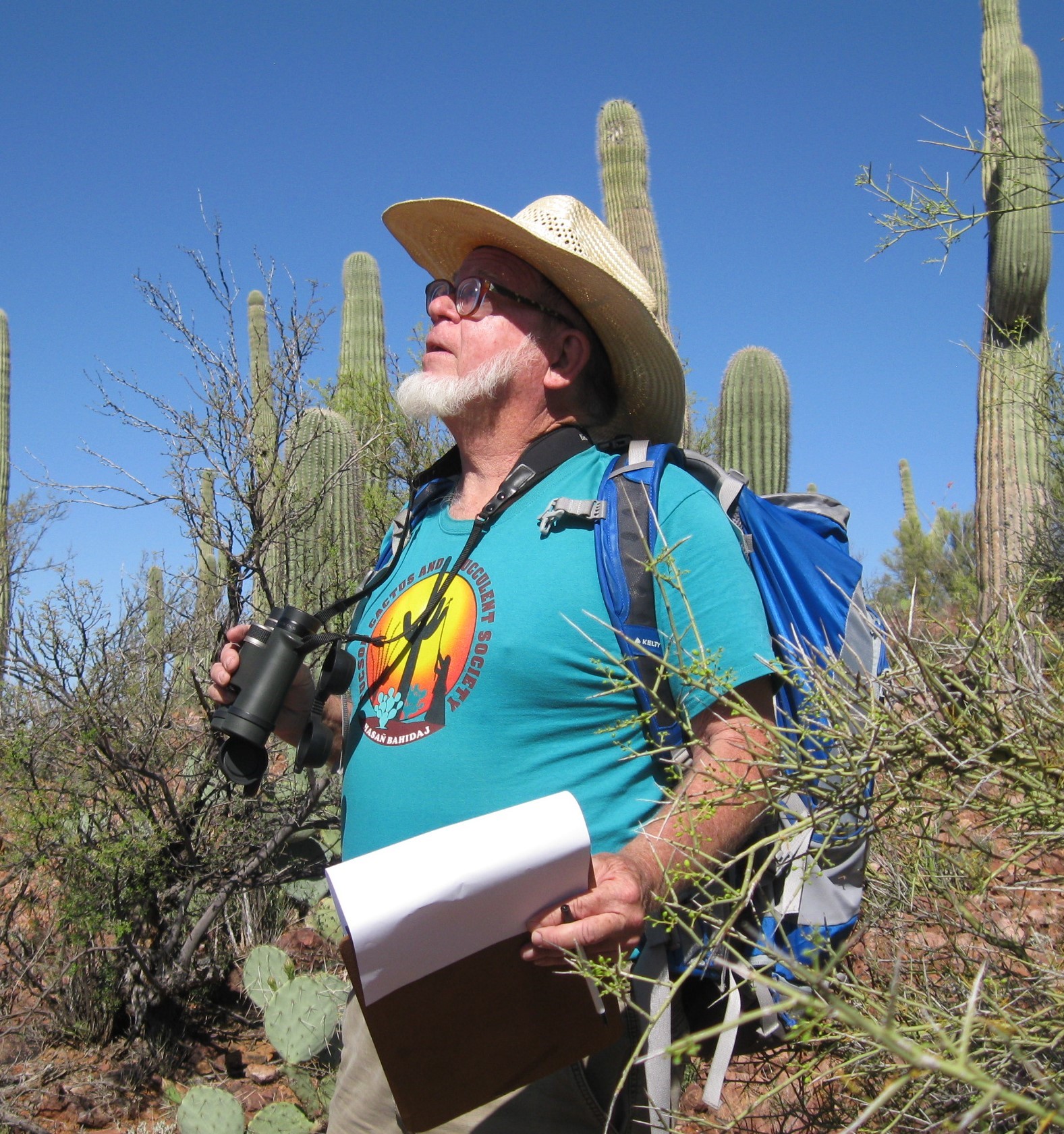
Bill Peachey is a Tucson-based researcher and longtime student of the saguaro (Carnegiea gigantea). Fascinated by the Sonoran Desert from an early age, Bill has spent more than two decades studying saguaros in the field, documenting their flowering, reproduction, anatomy, growth, mortality, and relationships with the animals that depend on them.
His interest in saguaros grew from earlier work in paleontology and wildlife research. In the 1990s, following research on the Mexican long-nosed bat, Bill began closely monitoring saguaro flowering and has continued returning to the same study populations year after year. His detailed observations have contributed to research on saguaro flowering phenology and the effects of environmental conditions on these iconic cacti.
Bill’s work combines careful field observation with a natural curiosity about how saguaros function and interact with their environment. He has investigated everything from the timing and sequence of flowering to the internal anatomy and growth of stems and arms. His extensive field knowledge has also made him a valued resource for researchers, conservationists, and others studying saguaros in the Tucson region.
A longtime member of the Tucson cactus and succulent community, Bill is known for his enthusiasm, generosity, and remarkable depth of knowledge about the saguaro. He continues to explore and document these iconic plants throughout the Sonoran Desert.
Dr. Michiel Pillet

Dr. Michiel (Mich) Pillet is a Postdoctoral Research Scholar at the University of South Florida and a leading advocate for cactus conservation. He serves on the IUCN Species Survival Commission Cactus and Succulent Plants Specialist Group, the IUCN SSC Succulent Plant Illegal Trade Task Force, the CSSA Conservation Committee, and chairs the Tucson Cactus and Succulent Society Conservation Committee. His research focuses on the impacts of climate change on cacti and the conservation of threatened species.
In his presentation, “Conservation, One Pot at a Time,” Dr. Pillet explores how ethical horticulture can play a vital role in protecting some of the world’s most endangered cacti. Drawing on his experience operating Prickly Prospects, a conservation-focused nursery in Tucson, Arizona, he discusses the challenges of propagating rare species, preserving genetic diversity, documenting provenance, and reducing pressure on wild populations. His talk demonstrates how growers, collectors, and researchers can work together to transform cultivation into an effective tool for plant conservation.
Rob Romero

Rob Romero is a lifelong cactus enthusiast whose passion for exploring plants in habitat has shaped both his hobby and his travels. A native of New Mexico, Rob discovered the organized cactus and succulent community in 1992 when a chance visit to a local cactus show and sale introduced him to the New Mexico Cactus and Succulent Society. There he met the late Steven Brack, founder of Mesa Garden, whose enthusiasm and knowledge helped spark Rob’s lifelong passion for cacti.
After joining the local society, Rob quickly became an avid collector, grower, and field explorer. While cultivating plants has always been an important part of the hobby, his greatest passion is observing cacti in their natural habitats. Over the years, he has traveled thousands of miles throughout the American Southwest, exploring remote landscapes and documenting the remarkable diversity of native cacti.
Rob spent 25 years living in Tucson before returning to his home state of New Mexico, where he now resides in Belen. Since moving back, he has devoted countless hours to rediscovering the rich cactus flora of central New Mexico. Now retired, Rob makes plant-focused travel a priority and enjoys sharing his firsthand experiences and knowledge with fellow cactus enthusiasts.
John Trager

John Trager is the Bernie and Miyako Storch Curator of the Desert Garden and Collections at The Huntington Library, Art Museum, and Botanical Gardens, where he oversees one of the world’s most significant collections of cacti and succulents. With decades of experience in horticulture, conservation, and botanical collections management, John has played a key role in advancing the appreciation and understanding of arid-land plants.
A longtime advocate for cactus and succulent conservation, John has contributed extensively to the development of The Huntington’s Desert Garden, helping to showcase both historic specimens and important plant collections from around the world. His expertise encompasses plant exploration, cultivation, taxonomy, and the preservation of rare and unusual species.
Through his writing, lectures, and public programs, John shares his deep knowledge of cacti and succulents with gardeners, researchers, and enthusiasts worldwide. He brings a unique perspective that combines scientific understanding with a lifelong passion for these remarkable plants.
Dr. Robert H. Webb

Dr. Robert H. Webb is a retired research hydrologist with the U.S. Geological Survey and a botanist whose career has focused on long-term ecological change, plant ecology, and conservation in arid and semiarid regions. He has studied natural ecosystems of the southwestern United States and Mexico since 1976 and African ecology since 2003. His interdisciplinary research combines extensive field experience with a deep interest in the diversity, ecology, and conservation of arid-land plants.
Robert earned a B.S. in Engineering from the University of Redlands, an M.S. in Environmental Earth Sciences from Stanford University, and a Ph.D. in Geosciences from the University of Arizona. He worked as a research hydrologist with the U.S. Geological Survey in Tucson from 1985 until his retirement in 2013 and remains affiliated with the University of Arizona Desert Laboratory. Over the course of his career, he has authored or edited 15 books and approximately 250 publications and has given nearly 400 presentations.
He has grown succulent plants and cacti for more than 40 years. For nearly three decades, he and his wife, Toni, have traveled extensively throughout Africa and the Arabian Peninsula in search of succulent plants. Together, they have owned and operated Arid Lands Greenhouses in Tucson, Arizona, for 20 years.
A longtime student of succulent plants, Robert is the former chairman of the International Sansevieria Society and currently serves as editor of its journal, Sansevieria. He has described and named 22 plant species or subspecies, including two Agave species from Baja California, Mexico, and 20 Sansevieria species, subspecies, or varieties from East Africa and Somalia. His botanical work reflects decades of field research and a particular interest in the remarkable diversity of succulent plants and their natural habitats.
Final speakers are subject to change.
Header photos by Desire Alexander